There is a story woven into Spain’s cities, and a Jewish Spain tour is the way to read it. The Sephardic Jews, named for Sepharad, the Hebrew name for the Iberian Peninsula, lived, studied and traded here for well over a thousand years. Their legacy is still in the stone: in synagogues, in street names, in the layout of old quarters.
The Rich Jewish Spain Tour, as we first wrote it up, was about that legacy: a trip that is part holiday and part walk through a lost world. This guide covers what you will see, what to taste, and what to ask before you book. For the tour itself, dates, itinerary and price are being confirmed; contact us and we will tell you what we are running.
Who were the Sephardic Jews of Spain?
A Jewish Spain tour takes you back to the history of the Jews in Spain, and to the Sephardic Jews who flourished in Toledo, Córdoba, Barcelona and many smaller towns. They were scholars, doctors, translators, merchants and officials. Maimonides was born in Córdoba. Their influence reached Spanish art, science and philosophy.
It ended in 1492. The Alhambra Decree, issued on March 31 of that year, ordered Jews who would not convert to leave the Crowns of Castile and Aragon by July 31. Families took their keys, their songs and their recipes to North Africa, the Ottoman Empire and beyond. You can follow that same road from Portugal to Morocco, where Sephardic communities kept the traditions going.
Walking these streets, you are tracing the footsteps of Sephardic Jews who prayed, celebrated and ran their households in the same lanes. The walls are the evidence. Toledo and Córdoba show how people of different faiths shared one city, in markets, in study and in the work of translation.
Which Sephardic synagogues should you see in Spain?
Architecture is the clearest record. These buildings show how the community lived, and how far its craftsmen’s skill reached. Three are worth the journey.
Santa María la Blanca, Toledo
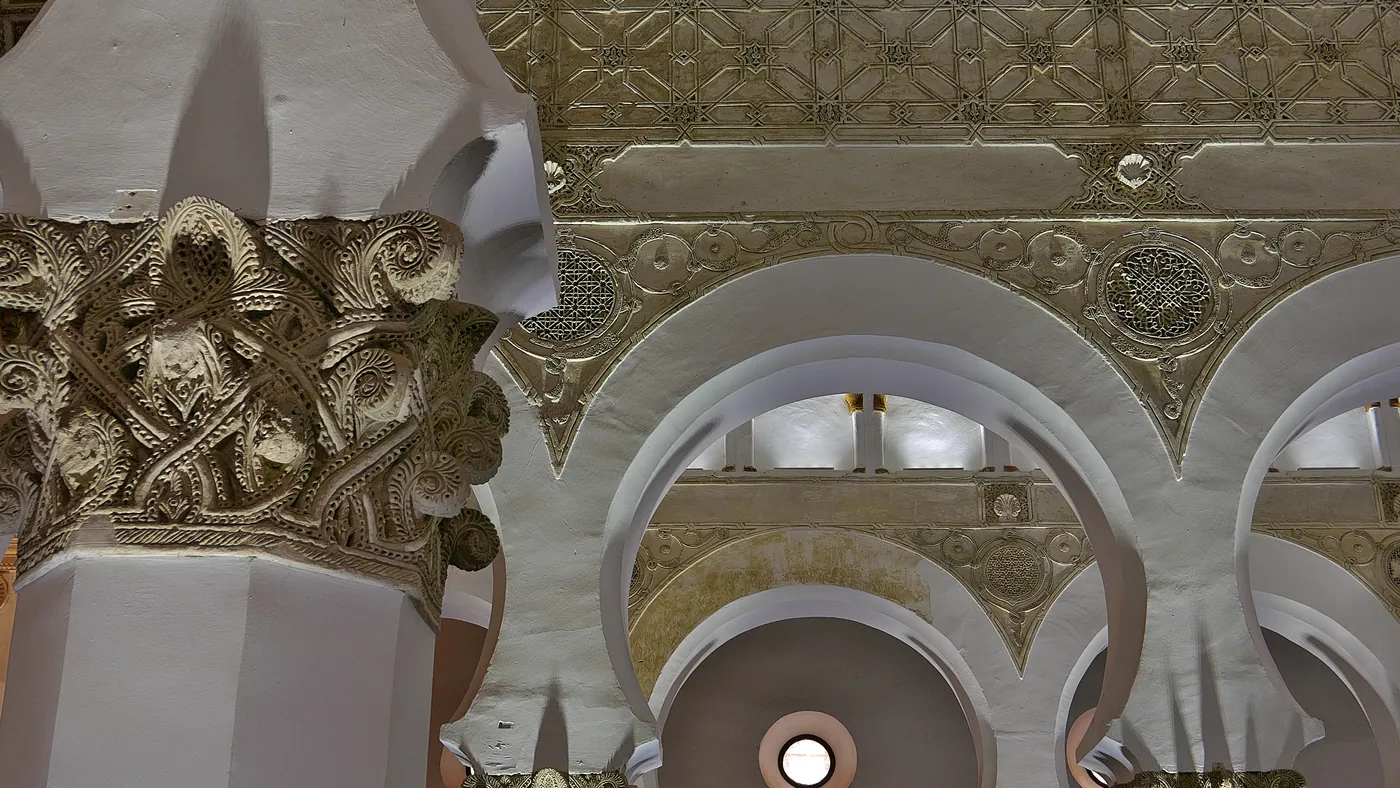
The oldest of Toledo’s two surviving medieval synagogues dates from the 12th century. Inside, rows of horseshoe arches stand on octagonal pillars, with plain white walls above and carved capitals below. The style is Moorish, with later Gothic and Mudéjar touches. The building was later a church, and its history is part of the visit. It shows the harmony of cultures at its best, and the shifts that followed.
El Tránsito, Toledo
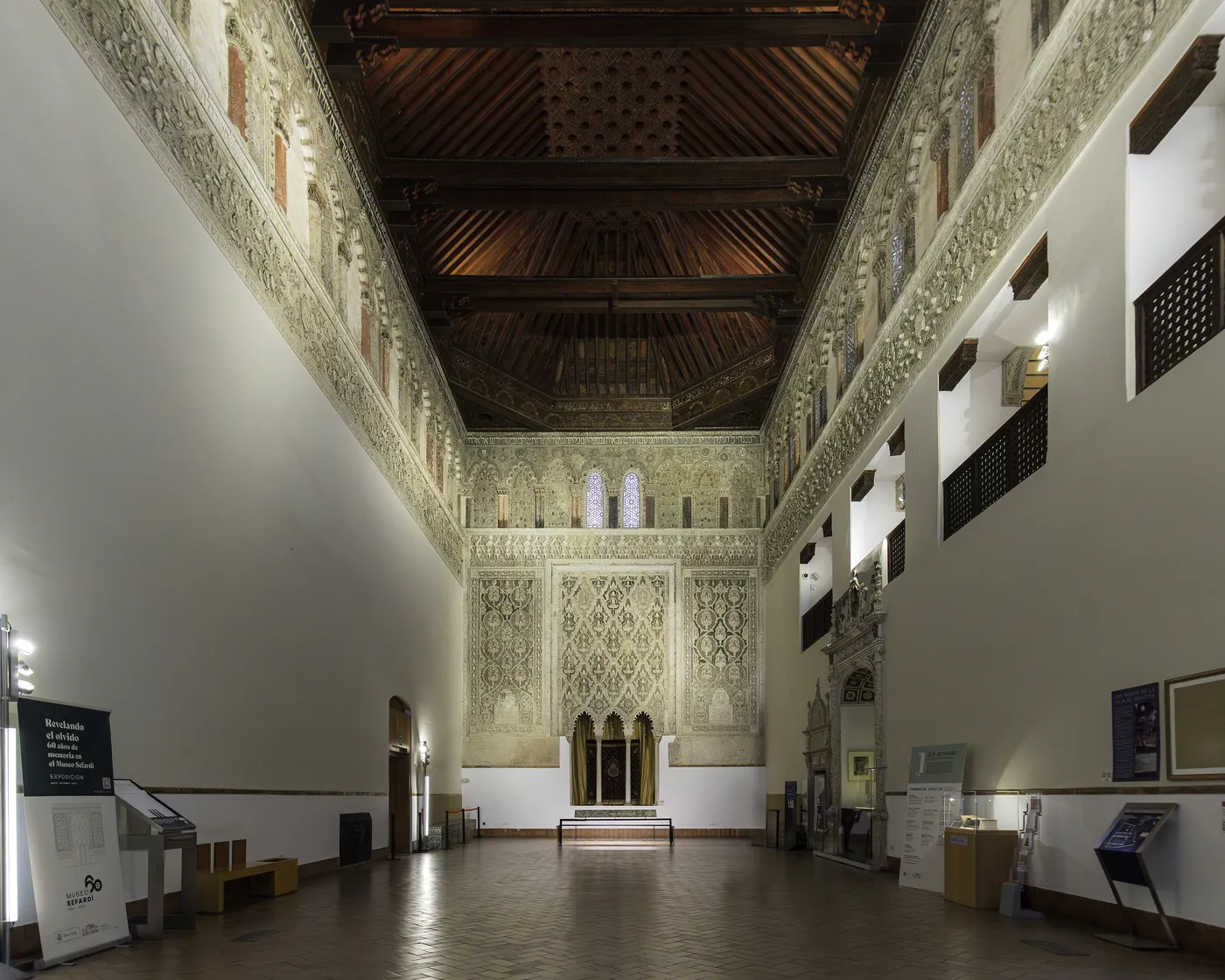
Built about 1357 for Samuel ha-Levi, treasurer to King Pedro I of Castile, El Tránsito has a tall prayer hall under a carved wooden ceiling. Hebrew inscriptions run along the stucco walls. The building now houses the Sephardic Museum, so you can see ritual objects and tombstones as well as the hall.
The Córdoba synagogue
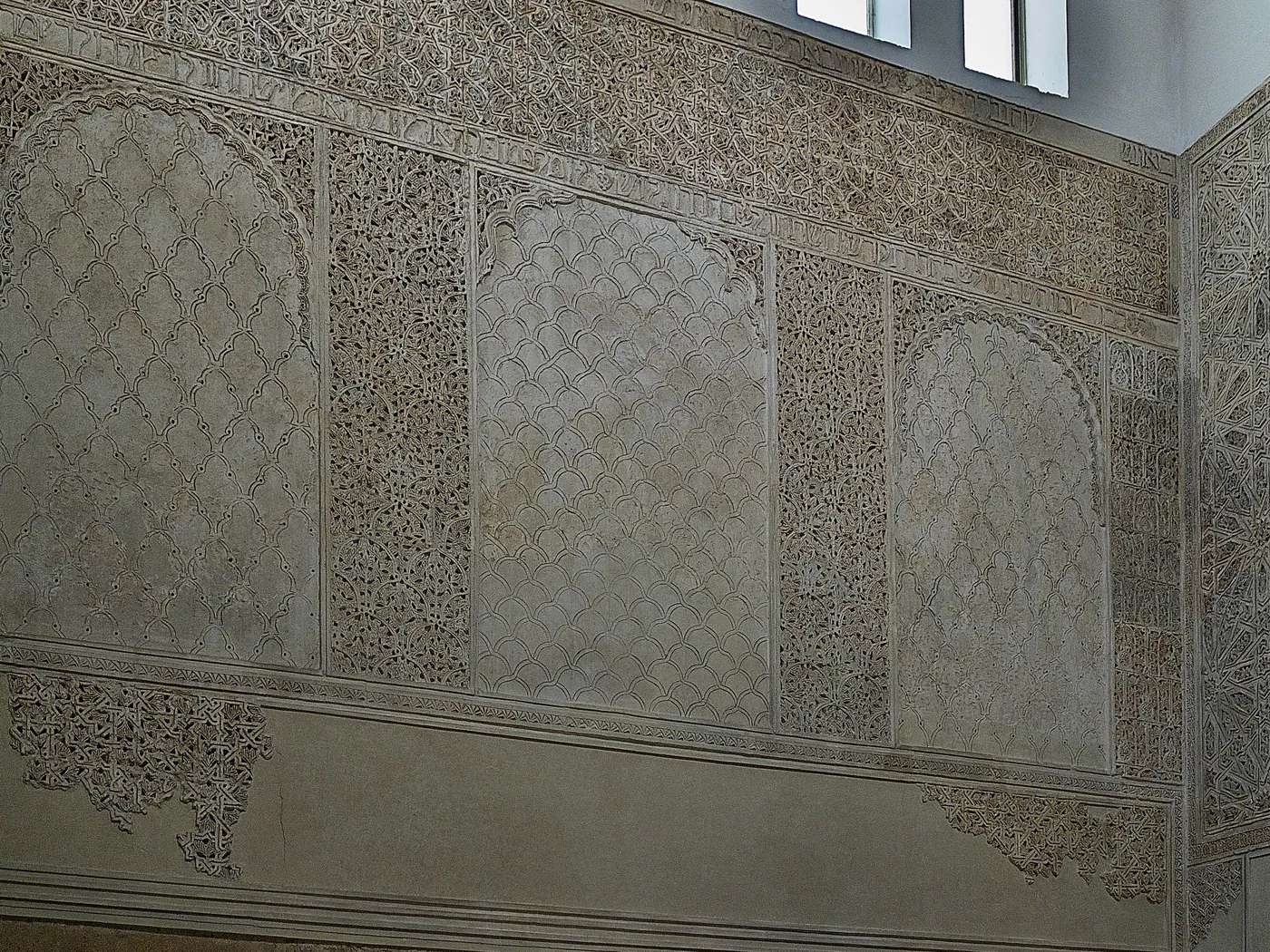
Small and dated to 1315, the Córdoba synagogue is the only medieval synagogue in Andalusia that survives. Its walls are covered in stucco in patterns of leaves and arches, and Hebrew verses run along the top. It is a short visit and a memorable one.
Each of these buildings is a community’s work in plaster and wood. The Red de Juderías, the network of Spanish cities with Jewish heritage, publishes opening times and routes for the quarters you will walk.
What did Sephardic cooking add to Spanish food?
Sephardic cuisine is where tradition and invention met. Cooks used the olive oil, almonds, citrus and herbs of Iberia, and the spices that came across the Mediterranean in trade. Dishes were made to fit Shabbat and the festivals: slow-cooked stews, pastries, preserved fruit, dishes built around eggplant and rice.
Each dish carries a story of where a family lived and what it could buy. Sit at a table of well-prepared kosher food, and you are tasting a record of the journeys the community made. These are the dishes that families took with them in 1492, and that they still cook today in Jerusalem, Istanbul and Casablanca.
How do you connect with Sephardic culture on a tour in Spain?
A tour works best when it goes past the monuments. Meeting the people who live in these cities, and the craftspeople who still work in the old trades, gives the history a present tense.
Spain’s traditional crafts are still practiced: ceramics, textile weaving, the making of instruments. Toledo is known for its metalwork and Córdoba for its leather and silver. Workshops in cooking and crafts can be part of the program, which lets you make something with your own hands.
Look, too, for the living community. Madrid and Barcelona have active synagogues and kosher shops today, and a visit on a weekday can include a talk by someone who lives there. A local guide who knows the history of each quarter makes the difference between a list of sites and an understanding of them.
What should you ask before booking a Jewish Spain tour?
A tour is more than a list of places. It is a trip where the planning should stay out of sight. Before you book, ask:
- Who guides? A guide with real knowledge of Sephardic history, and time to tell it, matters more than the number of stops.
- Where are meals supervised? Kosher meals outside Madrid and Barcelona need arrangements. Ask what supervision there is, and where the meals are served.
- How are the days paced? Toledo, Córdoba and Barcelona are far enough apart that the transfers take half a day. A good itinerary keeps them from crowding out the sites.
- How do you get around? Private coach transport, with a driver who knows the cities, saves the hours that public transport would take.
- Where do you stay? Rooms near the old quarters let you walk to the sites in the evening, when the lanes are quiet.
Most Jewish tours of Spain cover the same core: Toledo, Córdoba and Barcelona, with a guide who knows the history, supervised kosher meals and private transport. What separates one from another is how the days are paced. Our Rich Jewish Spain Tour was planned along those lines: chosen hotels, private transport and a schedule that follows the history instead of fighting the clock. The current Spain program and its departures are being confirmed, and when it is ready we will list it with the rest of our European tours.
Where does the Sephardic story go next?
Spain is where the story begins, but it does not end there. From the Iberian Peninsula it runs through Portugal, where Sephardic heritage is still being rediscovered, and on to Morocco, where Sephardic families settled after 1492 and built communities that lasted for centuries. A trip that follows the route shows how one community carried its customs across three continents. The full range of our trips of this kind sits under Jewish heritage tours.
If you would like to see the Sephardic world beyond Spain, our Portugal tour and Morocco tour each follow part of that route. If you are choosing between them, ask us which suits your family.